


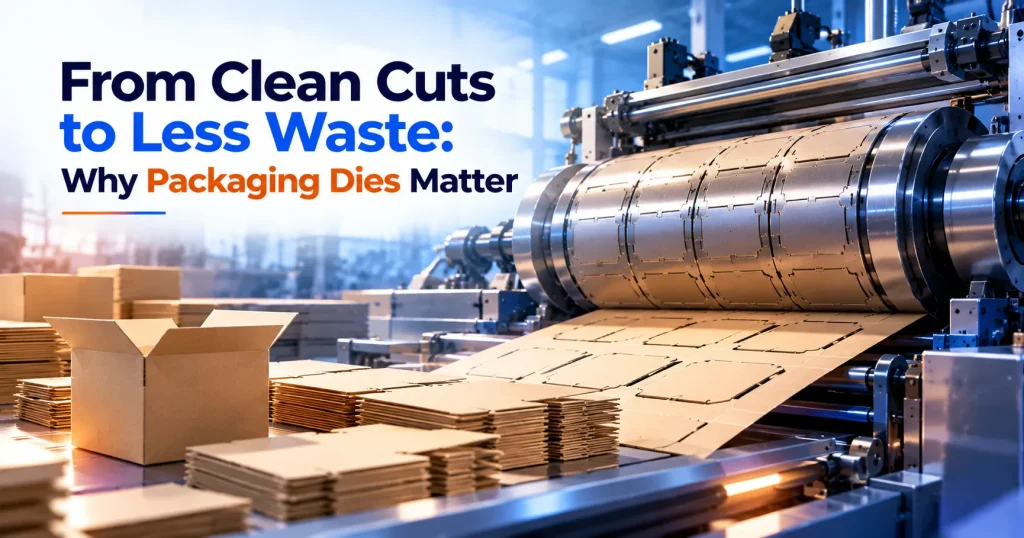
Packaging waste silently drains profits from operations that seem otherwise efficient. Every ragged edge, every scrap of material, every rejected package represents money leaving the building. The often-overlooked culprit? Die quality—specifically, the difference between conventional cutting mechanisms and precision rotary dies that were engineered to minimize waste at every rotation.
The True Cost of Imprecise Cutting
Most manufacturers track obvious costs—labour, energy, raw materials—while overlooking the compounding cost of poor cutting quality. A die producing even 3-5% more waste than optimal doesn’t just lose material; it multiplies losses through disposal fees, reduced yield, and quality-related customer returns.
Hidden Costs of Poor Die Performance:
- Material scrap from inaccurate cutting paths
- Rework labour correcting rejected packages
- Disposal fees for non-recyclable waste
- Customer returns from inconsistent quality
- Production delays from frequent jams and stoppages
Here’s an insight most manufacturers miss: waste isn’t just a materials problem—it’s a data problem. Facilities that don’t track waste at the die level (versus overall production level) often can’t identify which specific equipment is bleeding money, allowing inefficient dies to operate unnoticed for years.
How Rotary Motion Changes the Cutting Equation
Conventional stamp cutters operate through repeated impact—pressing down, lifting, repositioning, pressing again. Each cycle introduces positioning variables that create inconsistent material engagement, generating uneven scrap patterns that compound across production runs.
Rotary dies eliminate this variability through continuous circular contact, maintaining consistent engagement as material flows beneath the cutting surface. This isn’t a minor engineering difference—it fundamentally changes how efficiently material gets converted into usable packaging.
The Precision-Waste Connection
Dimensional accuracy and material waste are directly linked, though many manufacturers treat them as separate concerns. Precision rotary dies deliver:
- Tighter nesting patterns maximizing pattern density per sheet
- Consistent edge quality eliminating trim-and-retry cycles
- Reduced kerf width, preserving more usable material
- Uniform cutting depth preventing partial cuts requiring rework
- Minimal material distortion, maintaining substrate integrity
A valuable insight here: nesting efficiency compounds at scale. A 5% improvement in material nesting might seem marginal on a single run. Still, across millions of packages annually, that percentage translates into truckloads of saved substrate—often enough to offset equipment upgrade costs within a single fiscal year.
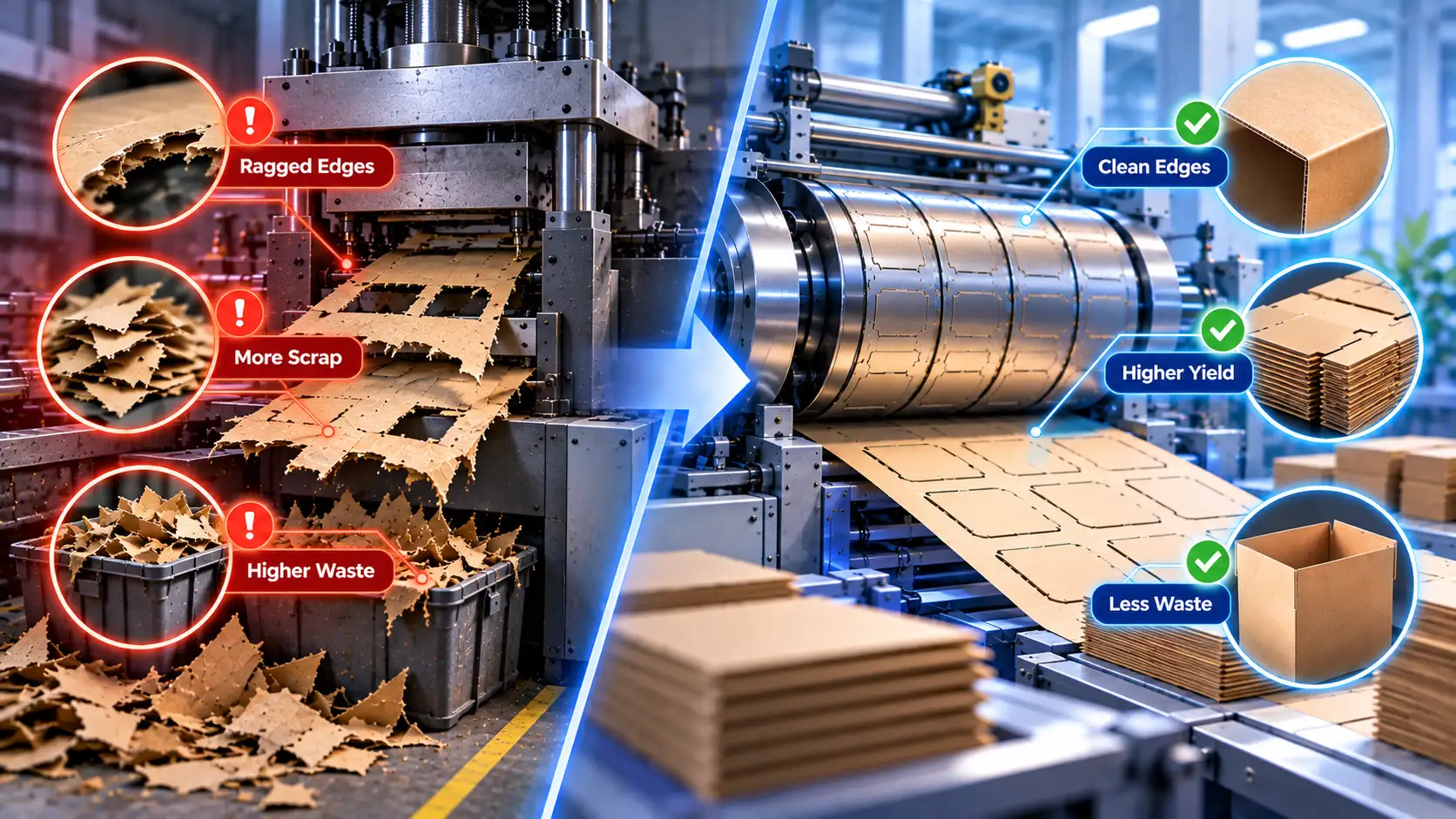
Clean Edges: More Than Aesthetics
Packaging professionals sometimes view edge quality as a cosmetic concern, but clean cuts serve functional purposes extending far beyond appearance. Ragged or torn edges compromise seal integrity, create weak points prone to tearing during shipping, and generate loose fibre particles that can contaminate packaged products.
Rotary die cutting produces consistently clean, burr-free edges because the continuous rolling action shears material cleanly rather than crushing or tearing it—a critical distinction for food-contact packaging, pharmaceutical applications, and any product where edge integrity affects functional performance.
Waste Reduction Through Predictable Wear Patterns
An underappreciated insight: waste generation accelerates as dies wear, but not always in ways operators notice immediately. As cutting edges dull gradually, materials require more force to cut cleanly, which paradoxically increases micro-tearing and inconsistent edges long before the die appears visibly worn.
Signs Your Die Is Increasing Waste:
- Gradually rising scrap percentages attributed to “material variation”
- Increased rework requirements without obvious cause
- More frequent quality complaints despite unchanged processes
- Rising material costs per unit without price increases
- Operator adjustments compensating for cutting inconsistencies
Rotary dies built with premium materials and advanced coatings maintain stable performance curves far longer than conventional alternatives, meaning waste percentages stay predictable and low throughout more of the die’s operational life.
Sustainability as a Business Driver
Environmental considerations have shifted from a compliance checkbox to a competitive differentiator. Brands increasingly evaluate packaging suppliers based on waste metrics, and manufacturers who can demonstrate genuine material efficiency gain preferential positioning with sustainability-conscious customers.
Precision rotary die cutting supports these goals by reducing raw material consumption, lowering energy use per unit, and decreasing disposal volumes—creating a business case where operational efficiency and environmental responsibility align rather than compete.
Calculating Your Waste Reduction Opportunity
Manufacturers upgrading to precision rotary dies typically report material waste reductions of 15-30%, though the actual figure depends heavily on previous equipment condition and application complexity. The most valuable insight for decision-makers: waste reduction savings often exceed labour savings in total financial impact, yet receive far less attention during equipment evaluation—a blind spot worth correcting.
The Bottom Line Nobody’s Talking About
While manufacturers obsess over production speed and labour efficiency, material waste quietly represents one of the largest controllable cost categories in packaging production—and the least examined. The dies that convert your raw material into finished product deserve the same scrutiny as labour costs and energy consumption.
Clean cuts aren’t just about quality—they’re about profitability hiding in plain sight. Every percentage point of waste eliminated flows directly to your margin, making die precision one of the highest-leverage investments available to packaging manufacturers today.
Stop losing profit to preventable waste. Sakazaki’s precision rotary packaging dies combine advanced engineering with proven waste-reduction performance, helping manufacturers convert more material into revenue with every production run.
Calculate Your Waste Reduction Potential
Curious how much material waste your current dies might be generating without you noticing? Request a complimentary waste audit comparing your current output against precision rotary die benchmarks.