


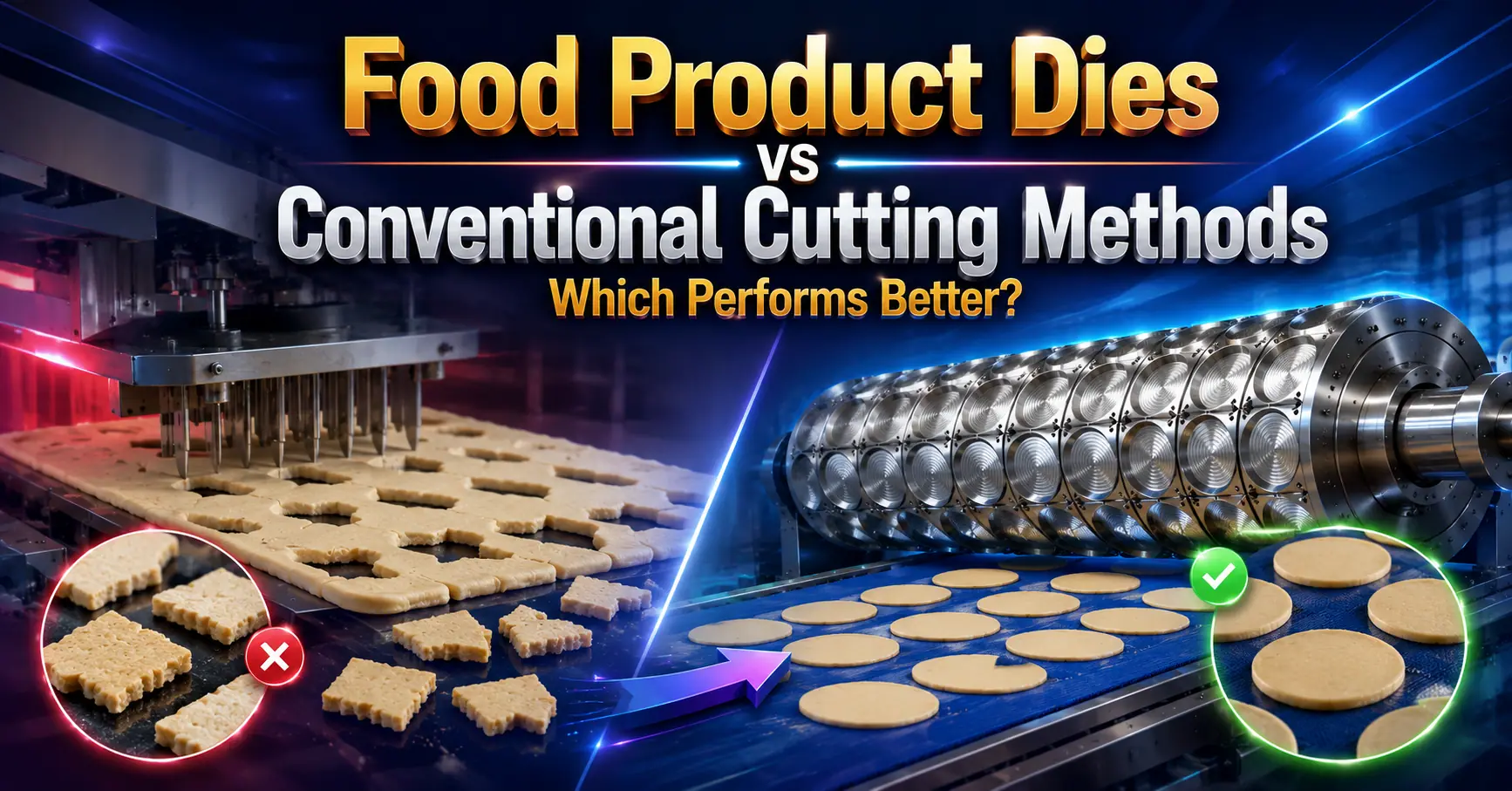
In the food manufacturing industry, precision, consistency, and production speed are no longer optional—they’re essential. Whether producing biscuits, cookies, snacks, bakery products, confectionery items, or frozen foods, manufacturers need cutting solutions that deliver uniform quality while keeping production costs under control.
While many facilities still rely on conventional cutting methods, modern rotary food product dies have transformed production lines by offering greater efficiency and reliability. But how do these two approaches compare? Let’s explore why rotary food product dies consistently outperform conventional cutting methods in industrial food manufacturing.
Why Manufacturers Are Moving Towards Rotary Food Product Dies
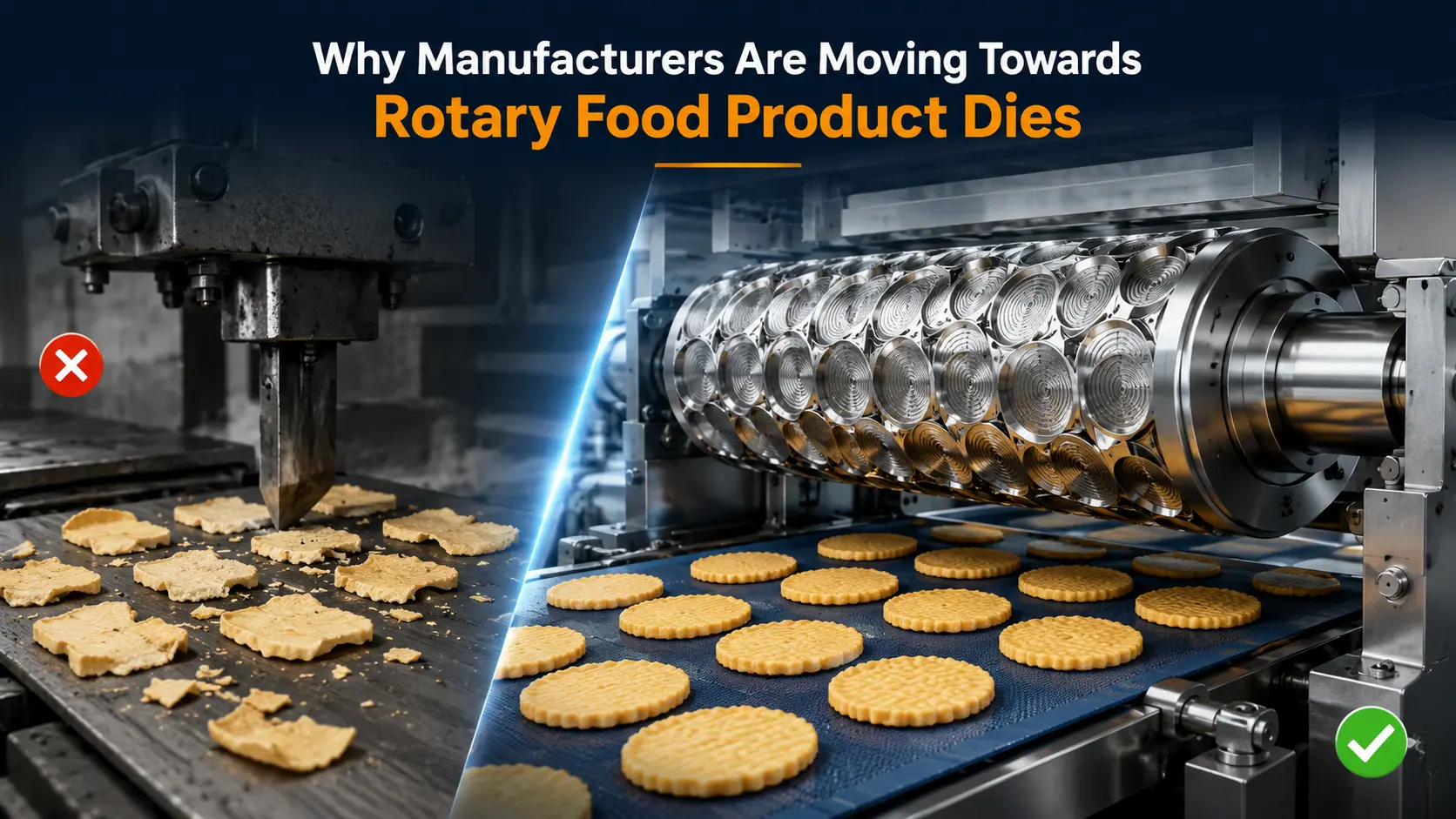
- High-speed continuous production with minimal interruptions.
- Uniform product dimensions across every production batch.
- Reduced raw material wastage, improving profitability.
- Clean, precise cuts without deforming delicate products.
- Lower maintenance requirements compared to traditional cutting systems.
- Excellent compatibility with automated production lines.
These advantages have made rotary dies the preferred choice for food manufacturers aiming to increase productivity while maintaining exceptional product quality.
Traditional cutting methods often depend on manual handling, reciprocating blades, or basic stamping mechanisms. While these techniques may work for small-scale operations, they often struggle to meet the demands of modern high-volume production. Rotary dies, on the other hand, are engineered for continuous operation, allowing manufacturers to maintain faster production speeds without sacrificing consistency.
Precision Makes the Biggest Difference
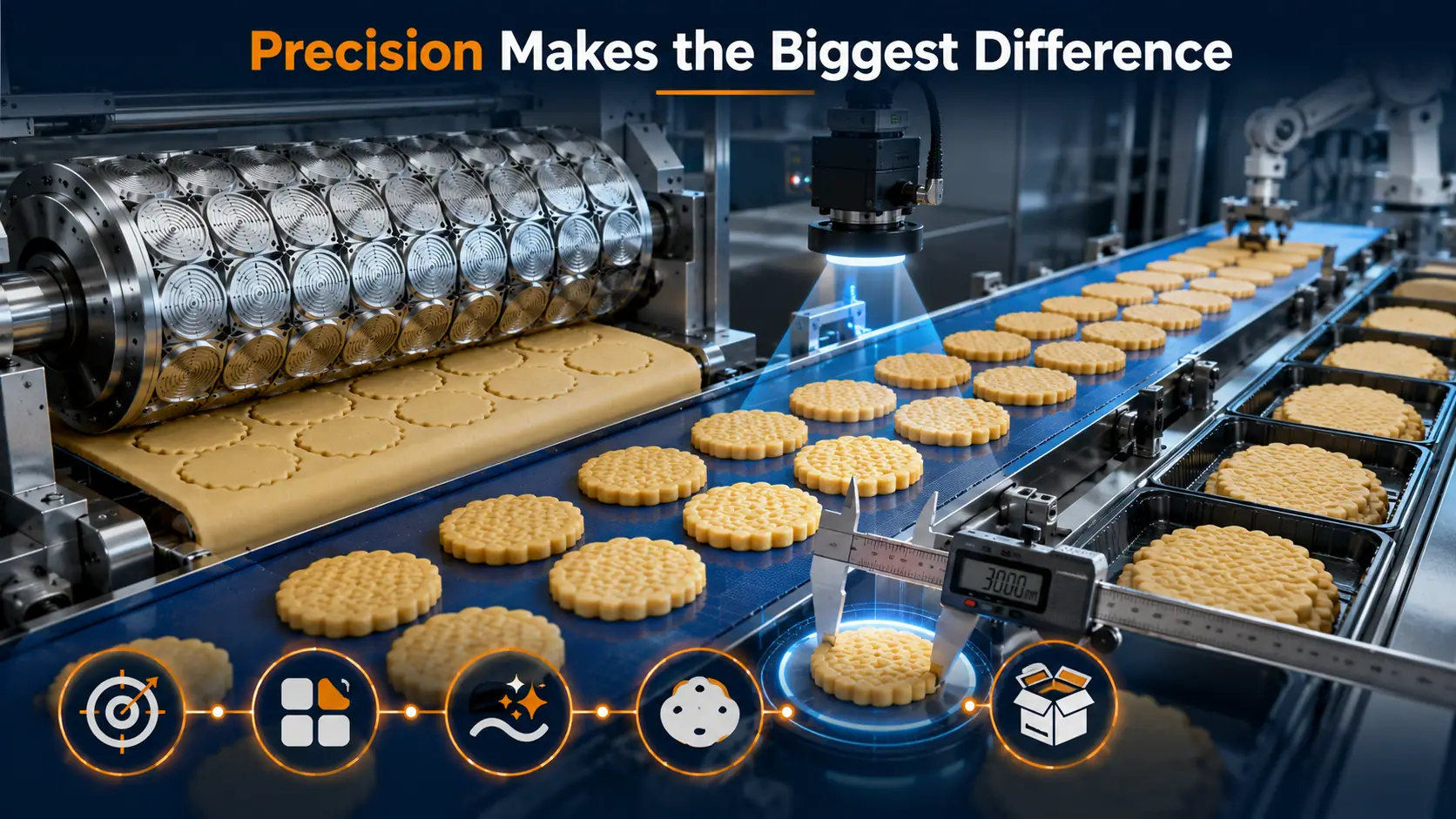
- Accurate cutting tolerances for every product.
- Consistent shapes and sizes that strengthen brand identity.
- Smooth edges that improve product appearance.
- Minimal product deformation, even for soft dough or delicate ingredients.
- Better portion control for improved packaging accuracy.
Consumers expect every product in a package to look identical. Even small variations can affect customer perception and quality standards. Rotary dies provide exceptional precision throughout the production cycle, ensuring every piece meets exact specifications.
Conventional cutting methods often experience blade wear, inconsistent pressure, or alignment issues, leading to uneven product sizes and increased rejection rates. Rotary dies eliminate many of these challenges through their advanced engineering and continuous cutting action.
Food Product Dies vs Conventional Cutting Methods: Comparison Table
Feature | Rotary Food Product Dies | Conventional Cutting Methods |
|---|---|---|
| Cutting Precision | Highly precise and consistent cuts with uniform dimensions | Inconsistent cuts due to blade wear and manual adjustments |
| Production Speed | Continuous high-speed operation for maximum output | Slower cutting with frequent production interruptions |
| Material Wastage | Minimal waste through optimized cutting accuracy | Higher material loss from uneven or inaccurate cuts |
| Product Quality | Clean edges and consistent product appearance | Rough edges and variations in shape and size |
| Maintenance & Downtime | Low maintenance with reduced machine downtime | Frequent maintenance and blade replacements increase downtime |
| Overall Cost Efficiency | Lower long-term operating costs with higher ROI | Higher labor, maintenance, and wastage costs over time |
Efficiency Beyond Production Speed
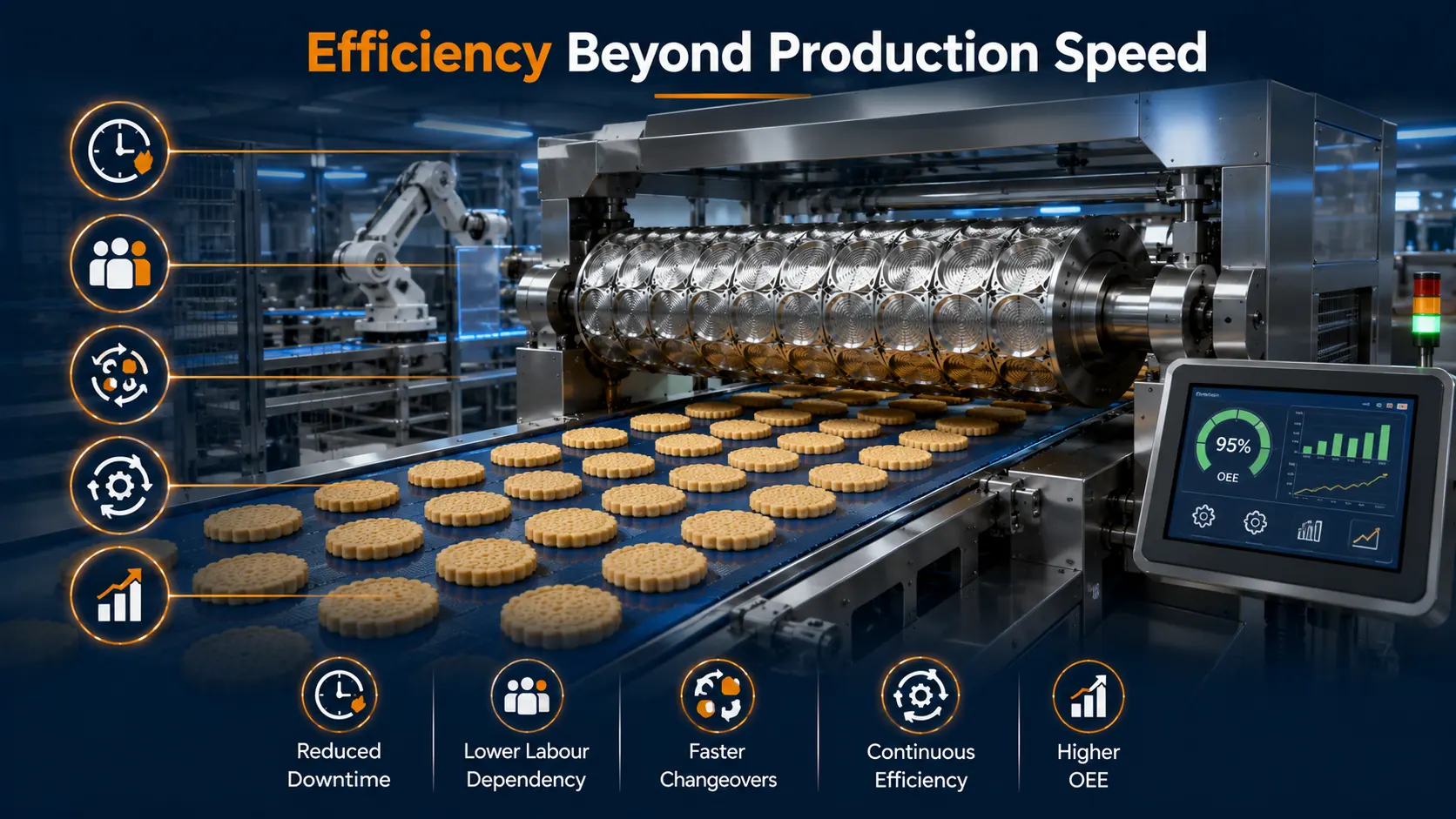
- Reduced machine downtime during production.
- Lower labour dependency through automation.
- Faster changeovers for different product designs.
- Improved operational efficiency with continuous cutting.
- Higher overall equipment productivity (OEE).
Modern food manufacturers don’t simply measure success by production volume—they focus on maximizing equipment utilization and minimizing operational costs. Rotary dies contribute significantly by reducing stoppages and enabling uninterrupted production, making them a valuable investment for growing businesses.
As production demands increase, conventional methods often require additional manpower, more maintenance, and frequent blade replacements. Rotary die systems help overcome these limitations while delivering consistent long-term performance.
Product Quality That Builds Customer Trust
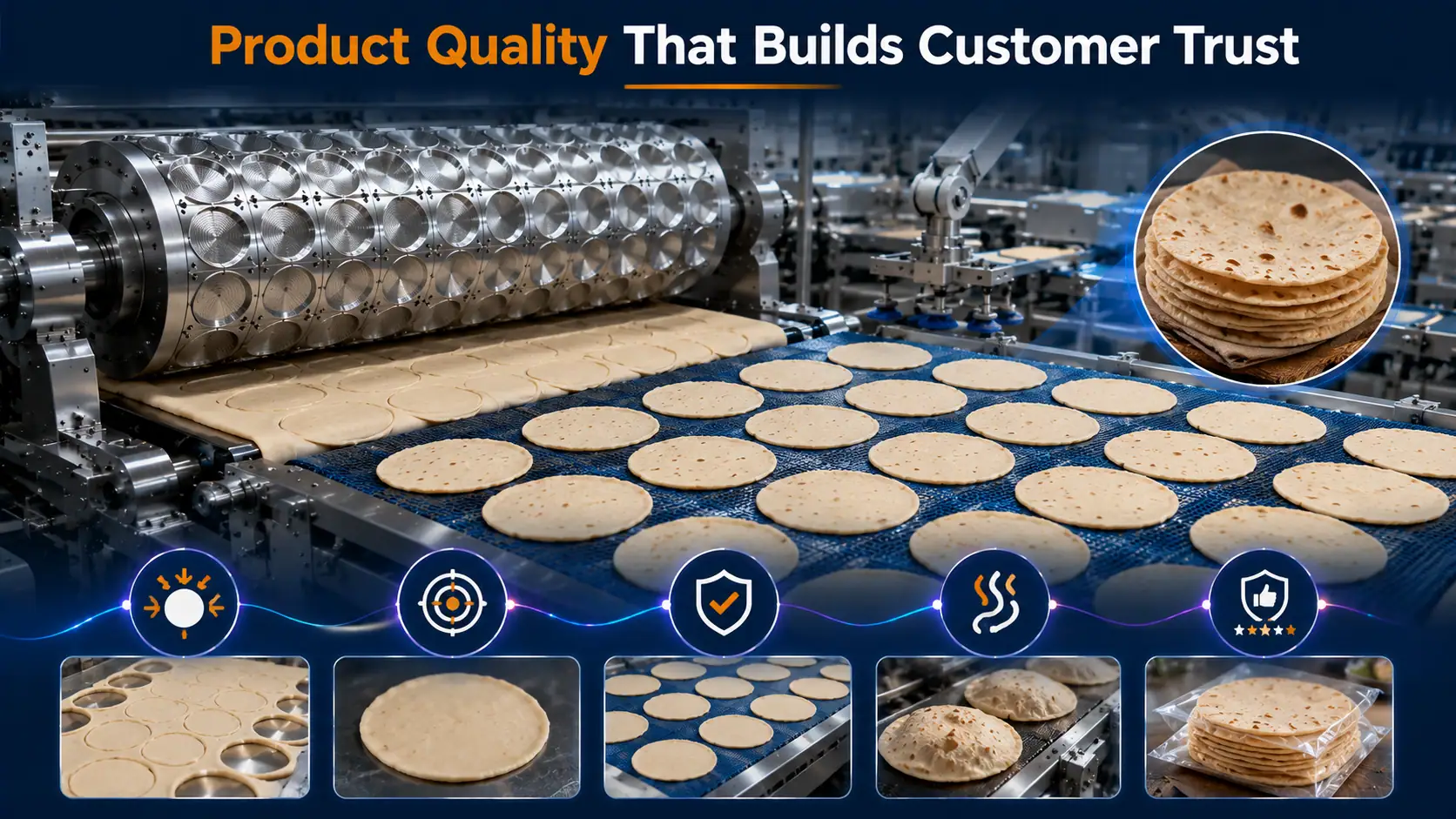
- Uniform product appearance across every batch.
- Improved edge finish for premium presentation.
- Less product damage during cutting.
- Consistent baking or cooking performance due to equal sizing.
- Higher customer satisfaction through reliable product quality.
Product consistency directly influences customer confidence. Whether manufacturing cookies, crackers, pet food, or snack products, maintaining identical dimensions helps improve packaging, baking performance, and overall product presentation.
Rotary dies produce repeatable results throughout extended production cycles, helping manufacturers maintain quality standards while reducing waste caused by inconsistent cutting.
Long-Term Cost Benefits of Rotary Food Product Dies
Although conventional cutting systems may appear less expensive initially, they often generate higher operational costs over time through maintenance, downtime, material wastage, and inconsistent output.
Rotary food product dies deliver better return on investment by improving production efficiency, reducing rejects, lowering maintenance expenses, and supporting continuous manufacturing. Over the long term, these advantages significantly outweigh the initial investment, making rotary dies a smarter choice for food processing facilities focused on sustainable growth.
Manufacturers looking for dependable, high-performance rotary die solutions can explore the innovative offerings from Sakazaki, designed to meet the evolving needs of modern food production with precision, durability, and exceptional engineering.
The comparison is clear. While conventional cutting methods still serve certain applications, rotary food product dies provide unmatched advantages in speed, precision, consistency, efficiency, and long-term cost savings. As food manufacturers continue embracing automation and higher quality standards, rotary die technology has become an essential part of modern production lines.
Investing in advanced rotary dies isn’t simply about cutting products—it’s about improving productivity, reducing waste, maintaining consistent quality, and strengthening your competitive advantage in today’s demanding food industry.
Upgrade Your Production with Precision That Delivers Results
Every perfectly cut product begins with the right technology. Discover how Sakazaki’s advanced rotary food product dies can help you increase production efficiency, reduce waste, and achieve consistent product quality across every batch. Explore our solutions today and take the next step toward smarter, more profitable food manufacturing.