

Premature die wear costs manufacturers thousands in unexpected replacements, production downtime, and quality inconsistencies. Understanding what accelerates deterioration—and how superior rotary die technology, combined with proper care, prevents it—can turn your equipment from a recurring expense into a long-term asset.
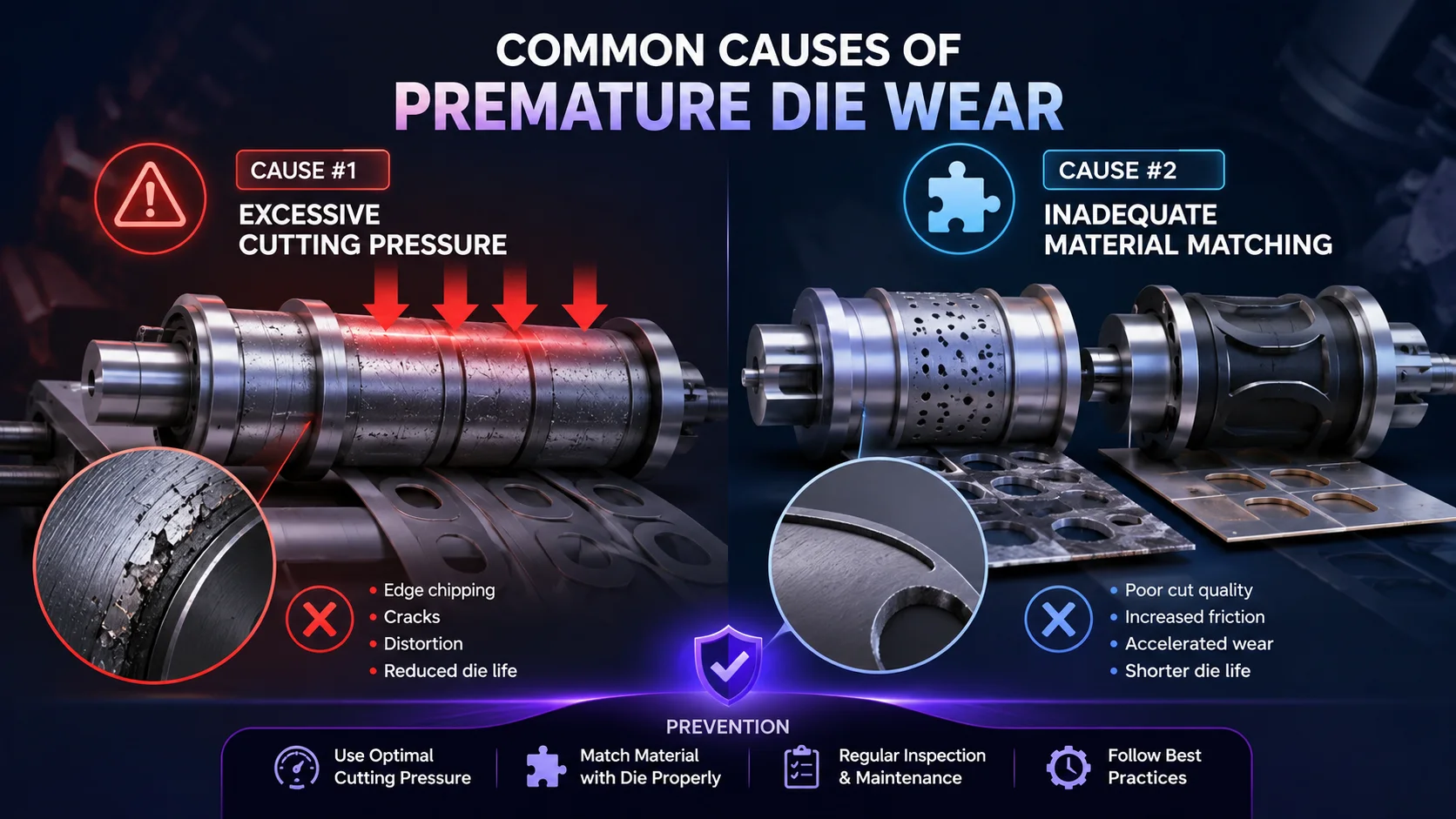
Cause #1: Excessive Cutting Pressure
Incorrect pressure settings represent one of the most common wear accelerators. Too much force compresses cutting edges beyond design tolerances, while operators often increase pressure to compensate for other underlying problems—creating a destructive cycle.
Signs of Pressure-Related Wear:
- Uneven edge deterioration across the cutting surface
- Premature dulling despite normal usage hours
- Micro-fractures appearing at stress points
- Inconsistent cut depth across production runs
- Accelerated coating breakdown on treated surfaces
Rotary dies inherently distribute cutting pressure more evenly than reciprocating alternatives. Continuous rolling contact spreads force across the engagement zone rather than concentrating impact at a single moment, significantly reducing stress-related wear compared to stamp-cutting mechanisms.
Cause #2: Inadequate Material Matching
Mismatched die materials for specific applications dramatically accelerate wear. Using standard tool steel for abrasive materials, or inappropriate coatings for corrosive environments, guarantees premature failure regardless of maintenance quality.
Material Compatibility Factors:
- Substrate abrasiveness requiring appropriate hardness levels
- Chemical exposure demanding corrosion-resistant materials
- Temperature conditions affecting material stability
- Production volume determining necessary durability grades
- Multi-layer complexity requiring specialized edge geometries
Premium rotary die construction—using tungsten carbide, powder steel, or properly heat-treated alloys—withstands demanding applications that would rapidly destroy standard cutting tools.
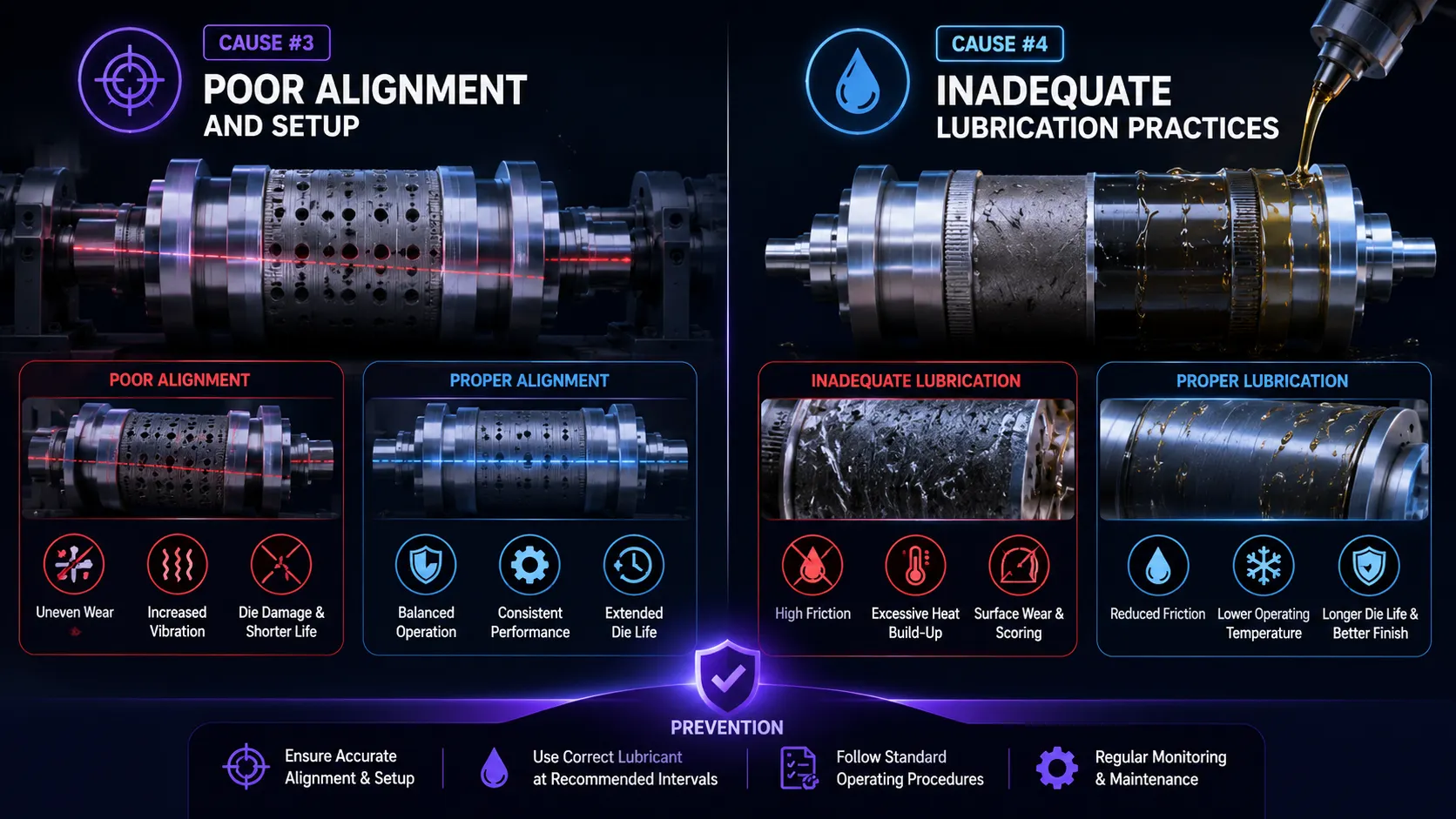
Cause #3: Poor Alignment and Setup
Misalignment issues create uneven wear patterns that dramatically shorten operational life. Even minor deviations compound over millions of cutting cycles, transforming small setup errors into significant performance problems.
Operators frequently overlook alignment verification during routine changeovers, assuming previous settings remain accurate. However, thermal expansion, vibration, and normal operational stress gradually shift positioning, creating alignment drift that accelerates localized wear.
Rotary die systems offer inherent alignment advantages through their cylindrical geometry and consistent rotational path—eliminating the positioning variables that plague reciprocating systems requiring precise vertical alignment for every cycle.
Cause #4: Inadequate Lubrication Practices
Improper lubrication accelerates friction-related wear significantly. Too little lubrication increases heat generation and material stress, while incorrect lubricant types can chemically degrade cutting surfaces.
Lubrication-Related Wear Indicators:
- Increased operating temperature during production
- Visible discoloration on cutting surfaces
- Unusual noise levels suggesting friction issues
- Faster coating degradation than expected timelines
- Sticky residue buildup affecting cutting performance
Modern rotary dies with self-lubricating nano-coatings dramatically reduce this vulnerability, maintaining optimal friction characteristics without constant manual intervention—a significant advantage over conventional dies that require frequent lubrication.
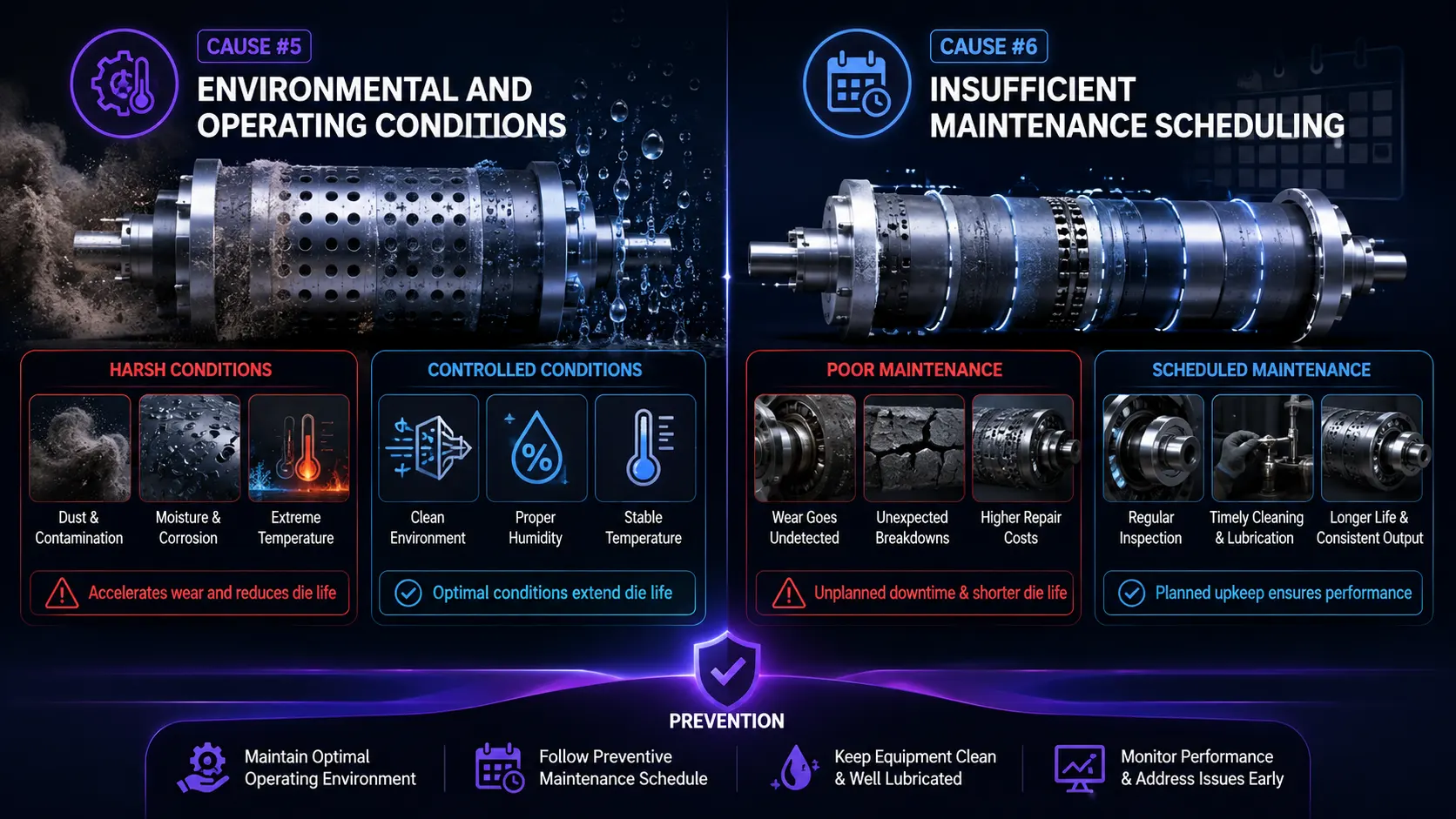
Cause #5: Environmental and Operating Conditions
Harsh operating environments—high humidity, temperature extremes, or corrosive atmospheres—accelerate deterioration beyond normal wear expectations. Manufacturing facilities rarely maintain perfectly controlled conditions, making equipment resilience essential.
Extended exposure to moisture without proper protection leads to oxidation and corrosion, compromising both cutting performance and structural integrity. Similarly, temperature fluctuations cause thermal expansion cycling that stresses material bonds over time.
Advanced rotary die coatings, including anti-corrosion treatments and thermal-stable formulations, provide protection that standard cutting tools simply cannot match—maintaining performance integrity even in challenging manufacturing environments.
Cause #6: Insufficient Maintenance Scheduling
Reactive maintenance—addressing problems only after performance visibly degrades—guarantees accelerated wear and shortened die life. By the time quality issues become apparent, significant damage has often already occurred.
Warning Signs of Maintenance Neglect:
- Gradual quality decline ignored as “normal” variation
- Increasing rejection rates attributed to other causes
- Extended time between inspections missing early warning signs
- Deferred sharpening allowing excessive edge degradation
- Postponed component replacement despite visible wear indicators
Operator Error and Training Gaps
Human factors significantly impact die longevity. Improper installation, incorrect operating parameters, or mishandling during changeovers introduces unnecessary stress and damage risk.
Comprehensive operator training programs addressing proper handling, installation procedures, and early warning sign recognition prevent countless premature failures that technical specifications alone cannot solve.
Prevention Strategy: The Rotary Advantage
Combining superior rotary die engineering with proactive maintenance creates the optimal wear-prevention strategy:
Immediate Actions:
- Verify pressure settings match manufacturer specifications
- Implement regular alignment verification protocols
- Establish appropriate lubrication schedules
- Schedule preventive maintenance before problems emerge
- Provide comprehensive operator training
Long-term Solutions:
- Upgrade to premium rotary die materials suited to your applications
- Invest in advanced coating technologies for demanding conditions
- Implement predictive maintenance monitoring systems
- Partner with experienced die manufacturers for application-specific guidance
The Compounding Value of Prevention
Manufacturers implementing comprehensive wear-prevention strategies alongside quality rotary die technology report dramatically extended operational lifespans—often doubling or tripling die life compared to reactive maintenance approaches paired with inferior cutting technology.
Premature wear isn’t inevitable—it’s largely preventable through informed material selection, proper operational practices, and technology that’s engineered for durability from the ground up. The manufacturers who understand this distinction gain significant competitive advantages through reduced costs, consistent quality, and minimized production disruptions.
Don’t let preventable wear factors compromise your production efficiency. Sakazaki’s precision rotary dies are engineered with advanced materials, superior coatings, and design features specifically created to resist the common causes of premature wear, delivering exceptional longevity even in demanding manufacturing environments.
Protect Your Investment from Premature Wear
Ready to eliminate the guesswork around die wear prevention? Connect with our technical specialists for a personalized wear-risk assessment and discover engineering solutions tailored to your specific production challenges. Get Your Wear-Risk Assessment →