


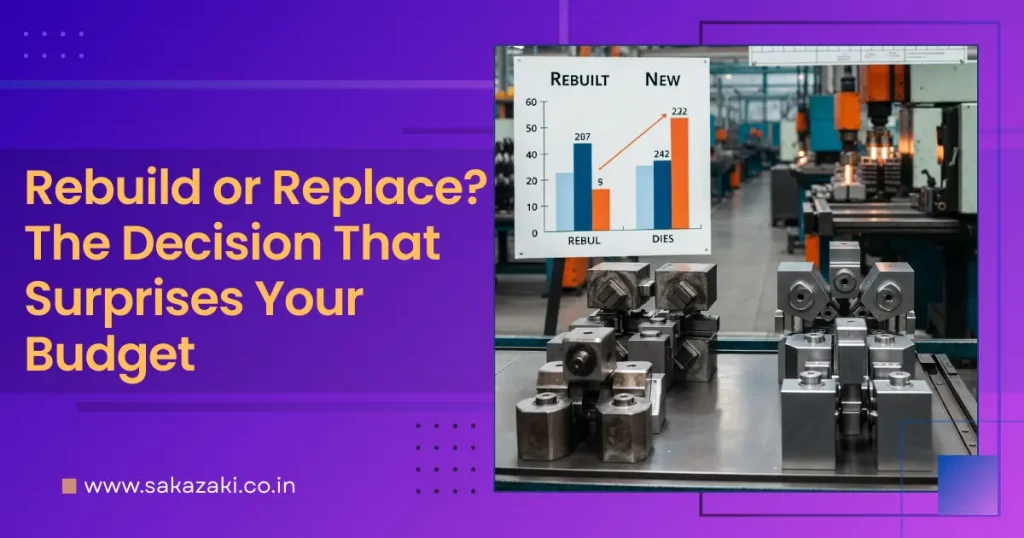
Every manufacturing operation eventually faces this critical question: Should we rebuild our worn dies or invest in new replacements? This decision significantly impacts capital budgets, production schedules, and product quality. Making the wrong choice wastes money—but making the right choice requires understanding the specific factors that determine optimal timing for each option.
The Rebuild Decision: When It Makes Perfect Sense
Rebuilding is the optimal choice when the fundamental structure remains sound despite surface wear or cutting-edge degradation. Specific conditions strongly favour rebuilding over replacement.
Rebuild When You See:
- Normal wear patterns on cutting edges with intact base structure
- Surface coating degradation, but solid underlying material
- Dimensional accuracy within correctable tolerances (±0.010mm or better)
- No structural cracks or catastrophic damage
- Stable production requirements with no design changes needed
- Budget constraints require cost-effective solutions
Time-sensitive situations also favour the die rebuilding. When production schedules cannot accommodate 8-12 week lead times for new dies, professional rebuilding delivers functional dies in 2-4 weeks—often the difference between meeting customer commitments or facing penalties.
The Replacement Decision: When New Dies Are Essential
Certain conditions make replacement the only viable option. Attempting to rebuild in these situations wastes resources while delaying the inevitable.
Replace When You Encounter:
- Structural cracks or fractures compromising the integrity of the die integrity
- Severe dimensional distortion beyond economical correction
- Design modifications required for product changes
- Material incompatibility with current applications
- Technology upgrades are demanding different specifications
- Base material degradation from chemical or thermal damage
- Excessive rebuild history showing diminishing returns
Strategic considerations also necessitate replacement. When expanding capacity, entering new markets, or launching products requiring different specifications, new dies provide the clean slate necessary for optimal performance.
Performance Indicators That Guide Decisions
Objective metrics remove guesswork from the rebuild-vs-replace decision. Monitor these performance indicators:
Critical Performance Metrics:
- Cutting quality consistency – Increasing variation suggests fundamental issues
- Maintenance frequency – Escalating needs indicate approaching end-of-life
- Production speed capability – Declining speeds reduce throughput
- Reject rates – Rising rejections signal deteriorating performance
- Dimensional accuracy – Tolerance drift beyond specifications
- Surface finish quality – Degrading finishes affect product appearance
Trend analysis proves more valuable than single measurements. Dies showing an accelerating decline rarely benefit from rebuilding, while those with stable, gradual wear make excellent rebuild candidates.
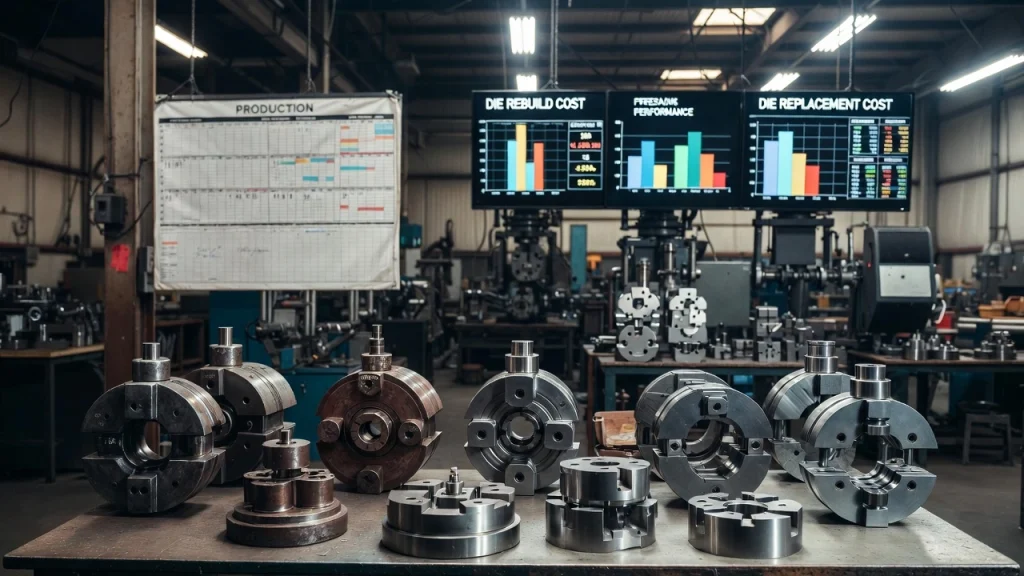
Production Schedule Impact Assessment
Timing considerations often override pure cost analysis. Consider your production calendar:
Immediate Needs (0-4 weeks):
- Rebuilding is the only option for a rapid turnaround
- New dies cannot meet urgent timelines
Planned Maintenance Windows (1-3 months):
- Evaluate both options based on total cost
- Consider long-term strategic value
Future Production Changes (3+ months):
- Replacement allows design optimization
- Consider upcoming product modifications
Total Cost Comparison
| Cost Factor | Rebuild | Replace |
|---|---|---|
| Initial Investment | Lower | Higher |
| Lead Time | 2–4 weeks | 8–12 weeks |
| Downtime Cost | Lower | Higher |
| Expected Lifespan | 2–4 years | 4–6 years |
| Performance Level | Restored to specs | Brand new baseline |
| Warranty Coverage | Limited | Full manufacturer warranty |
The Hybrid Strategy: Smart Long-Term Planning
Sophisticated manufacturers employ strategic planning combining both approaches:
Rebuild for:
- Standard production dies with routine wear
- Emergency situations requiring quick turnaround
- Budget-constrained periods preserving capital
- Interim solutions while planning capacity expansion
Replace with:
- Critical production dies affecting multiple lines
- Obsolete designs requiring modernization
- Capacity expansion projects
- Quality upgrade initiatives
Making the Right Call
The rebuild-vs-replace decision isn’t one-size-fits-all. Optimal choices balance immediate costs against long-term value while considering production requirements, budget constraints, and strategic goals.
Rule of thumb: If rebuilding costs exceed 50% of replacement cost while delivering less than 50% of the new die’s lifespan, replacement makes economic sense. Otherwise, rebuilding typically provides superior ROI.
Need expert guidance on your specific die situation? Sakazaki’s specialists provide honest, objective assessments, helping you make informed decisions that optimize both performance and investment returns.